
Netspinning Caddisflies: The Tiny Engineers of Our Streams
by Jordan Parman, Senior Water Quality Scientist
It’s been a long, hot, dry summer and we are ready for hoodie season, football, and some leaf peeping. Here at Metro Water Recovery, the Water Quality Division gets extra excited for our fish and aquatic macroinvertebrate sampling. It’s a fall tradition that begins as temperatures start to cool. Let’s take some time to appreciate our lesser-known river rock stars: the aquatic macroinvertebrates.
The Bugs That Tell the Story
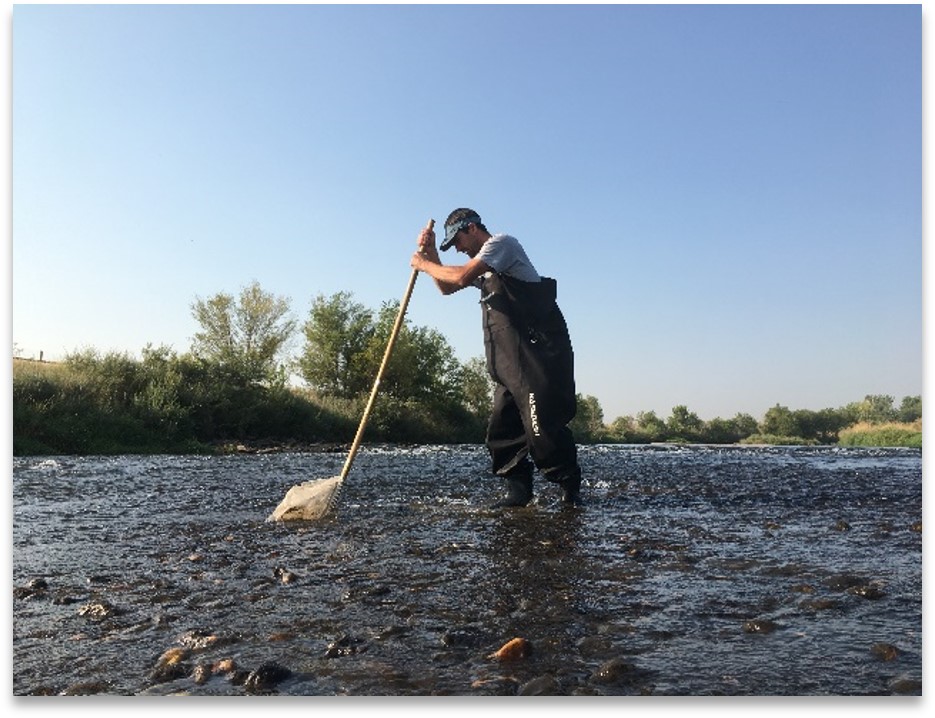
Every fall, our Water Quality employees collect macroinvertebrate samples at locations along the South Platte River, from Denver downstream to Platteville. Aquatic macroinvertebrates are small animals without backbones that live in or around freshwater environments such as rivers, streams and lakes. They are excellent indicators of water quality because they have limited mobility to get away from polluted water, they live long enough to reflect long-term environmental conditions, and they usually react to water pollution in predictable ways.
For example, some types of macroinvertebrates are very tolerant of water pollution and can thrive even in degraded water quality (e.g. aquatic worms, blood midges, leeches, etc.), while others are more sensitive to pollution and require cleaner, higher-quality water to thrive (e.g., mayflies, caddisflies, stoneflies and dragonflies).
For this Flow article I’d like to focus on one fascinating family of aquatic macroinvertebrates: Hydropsychidae, a type of net-spinning caddisfly.
The Humble Heroes of the Stream
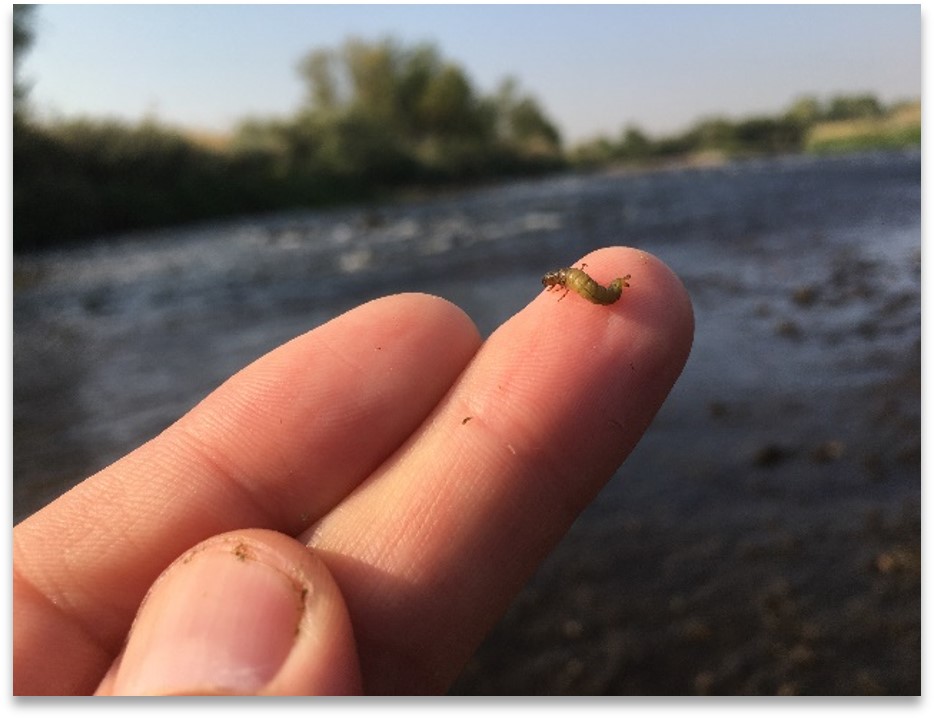
The presence of netspinning caddisfly larvae is a sign of good water quality. Because they’re sensitive to pollution, finding them in the South Platte River tells us we’re doing something right. They are also an important part of the aquatic food web and are a delicious juicy snack for all those South Platte River fish we love.
Netspinning caddisfly larvae are considered ecosystem engineers. This means that the larvae change their surroundings in ways that help other plants and animals, too. These booger-sized “bugs” may be tiny, but they play a surprisingly big role in the stream. By the way they feed and build their little homes, they create spaces that can benefit other aquatic life and even help keep the streambed stable.
A Tiny Home with a Big Purpose
The living and feeding habits of netspinning caddisfly larvae can have an outsized impact on the aquatic ecosystem around them. That’s because these little larvae aren’t just living in the stream, they’re helping shape it.
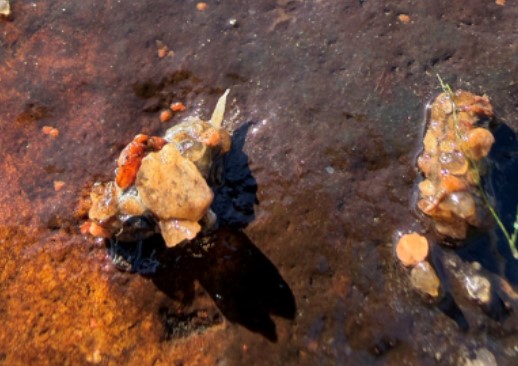
Netspinning caddisfly larvae live among the rocks and gravel at the bottom of streams. They build themselves a tiny home, called a “retreat,” using bits of plants, sand, and other materials. Then they spin a silky mesh net at the entrance. From there, they can sit back and let the food come to them. Algae, bits of plants, and other tiny critters floating through the stream get caught in their net. If there are enough larvae, all of their silky mesh nets and retreats can hold together the gravel in the streambed and stop the streambed and sediment from moving during times of high streamflow.
Their tiny homes can also become valuable pieces of real estate for their neighbors. Even after the larvae move on, their retreats and nets can stick around, continuing to provide structure and habitat in the stream. In a stream, the water is constantly flowing. Netspinning caddisfly retreats create tiny havens from the moving water, in turn helping other macroinvertebrates–such as mayfly nymphs–that favor slower-moving water.
One study suggests that caddisfly retreats create tiny areas of slower-moving water along the streambed, giving mayfly nymphs a place to live. Other studies have found that these retreats can remain in place for weeks, continuing to provide habitat even during drought or periods of poor water quality.
That’s what makes the netspinning caddisfly such a fascinating example of an ecosystem engineer. All of this happens quietly, on a tiny scale, right beneath the surface of the water. The best part: all this happens before these little larvae emerge from the water to become winged adults!
As we prepare to go out and collect our annual macroinvertebrate samples in the coming weeks, I’ll pause to appreciate the small but mighty netspinning caddisfly larvae. In our very hectic professional world, it’s important to take time to bask in wonder and appreciation of the natural world that we all work so hard to protect.